Archives 2018

REI – Acquisition of Rental #3

This post is just a short update on REI. We had a deal drop in our lap.

122.Sagewood.FrontElev

The Deal

We were not specifically looking to buy another property immediately. As detailed in a previous post, we were working on a deal earlier in the year, but it did not work out.


A member of the local REIA, who is also a realtor, has been looking out for properties I might be interested in. I had given her the specifics: three-bedroom, two-bath home on a slab foundation, preferably brick façade, in Thibodaux, in a decent neighborhood.

She had showed a couple of homes that were close, but not quite right for us, in addition to a mobile home park that was just too much for us to take on. (This was just prior to my surgery)

She contacted us with a property that fit our description exactly and told us the listing price, $144,500, and to make an offer. She indicated that the sellers were motivated. I looked it over and saw that we would be looking at a similar ROI to the property we bought last year with an offer of approximately $111,300. I did not think that the owners would accept that and they didn’t. They countered with $125,000 and we countered back with $112,451 cash sale with an end of month closing as a best offer. This would give us a ROI of just under 7%, based on a conservative analysis.

We fully expected things to end there. The sellers asked for the weekend to think about the offer, so we agreed.

On Monday, they accepted the offer (to our surprise) and we began the inspection period.

We set the closing date for the first Friday in December, as this was the soonest that the real estate attorney could complete the paperwork.


During the due diligence period, we determined that the only things needed were to change the locks, change an over-sized circuit breaker, and some minor cosmetic work.


Updated: We now have it listed for rent and are taking applications. The property was rented for January.

122.Sagewood.RentalFlyer2

And, as always, let me know what you think in the comments. Ask questions, tell your story.


If you like my posts, please share them with others and subscribe to this blog.

Personal Improvement – Gratitude: I am Thankful

For those of you in the USA, I would like to wish you a belated Happy Thanksgiving. We celebrated it last week with a quiet day at home, spending time with family and adding final touches to the Christmas display so we could turn it on Thanksgiving Night.

Gratitude-is-peaceIN

Gratitude

I am going to assume that a combination of it being Thanksgiving in the US and some smart marketing by  @ajjacobs for his new book “Thanks a Thousand – A Gratitude Journey” that made the topic of  gratitude continue to appear in my media consumption. From a podcast of Jacobs talking about his inspiration to write his latest book to memes on Facebook, both expressing gratitude and admonishing for expressing gratitude one day, then scrambling for doodads on Black Friday the next.


It got me thinking about how if you truly embrace the idea of gratitude, it helps to relieve stress and anxiety. Where @ajjacobs takes it to the extreme to thank everyone involved in his getting a single cup of coffee in the morning, you don’t have to be that exhaustive.

Be thankful for what you have. Or don’t have. But also remember to not use that as an excuse to stop pursuing your goals.


I would like to know more about my readers. If you could spare about 2 minutes of your time, please take a survey to tell me what you like about the blog. Just click here to take the survey.


What am I grateful for?

  • My Family. Without my family, I would not be who I am or where I am today. Specifically, my wife. She inspired me to strive to be greater. She inspired me.
  • My career. I have learned many things that have allowed me to grow outside of my job.
  • My health. Yes, I have medical issues, but I am luckier than a lot of people. As a benchmark, as morbid as it is, I have lived longer than my father and plan to live longer than my mother and grandparents did.
  • My friends. They make me laugh and encourage me.


What are you grateful for?


Please comment here on the blog about what you are grateful for. I would  like to know.


And, as always, let me know what you think in the comments. Ask questions, tell your story.

If you like my posts, please share them with others and subscribe to this blog.

Automation – Data Frequency: How “Real Time” Is Real Time?

Happy Finter from South Louisiana! Fall started to show up, but winter was riding shotgun! We went from highs of 81 degrees F / 27.22 degrees C to 45 degrees F / 7.22 degrees C AND clouds and rain. Christmas light show can wait a few more days to get set up.

Today we are going to go over Data Frequency and how it relates to aspects of drilling automation. How often we receive a data point for a given channel or curve.


Variations on Real Time


Ask someone what their definition of real time is and depending on their particular needs, you will get different answers. Some people feel that getting mud report data as checks are made is real time enough to keep them informed.

Others feel that getting a WITSML 1.3.x, (Wellsite Information Transfer Standard Markup Language), data feed that updates every ten to thirty seconds will be just fine.

Then there are others who are used to seeing the rig default of data coming in every 5 seconds and that is great!

Finally, there are those who opine for sub-second data frequencies to ensure valid tracking of rig component movement and calculations.

Depending on your particular needs, any of these might be valid. For a comprehensive approach, the platform should take into account the needs and requirements for the types of data being captured. It should be able to accommodate sensors or inputs that generate anything from one data point per day down to many data points per second.


(Just as an aside, I really like the way WITSML 2.x and ETP are shaping up for real time data)

I would like to know more about my readers. If you could spare about 2 minutes of your time, please take a survey to tell me what you like about the blog. Just click here to take the survey.

Data Frequency

The type of data should drive the frequency of data capture, in addition to what the usage of the data will be.

Some data doesn’t change very fast, so it does not need to be updated very frequently.

Things like wellbore and drill string geometry, fluid properties, and positioning data do not need to be updated every second or few seconds. In the case of drilling fluids, Density updates every one to two minutes is a decent frequency, whereas the oil/water ratio does not need to be updated as frequently.

Other data is constantly changing and depending the particular sensor, could indeed warrant the need for sub-second frequency data.


A good example for that need would be block position, which is used to calculate running speed or pipe acceleration. This is, in turn, utilized to calculate tripping hydraulics in real time.

The benefit of having the ability to do this based on sub-second data allows for simulating the micro-movement of pipe in tight window scenarios…too much down hole pressure, the formation breaks down, causing fluid losses and too little down hole pressure, the formation fluids/gases come into the wellbore, thus inducing a kick.


Logical Assumptions & Why It Matters


Not all data needs to be updated at a high frequency. As indicated in the above section, data frequency depends on how often the data changes. The higher the change rate, the higher the data frequency needs to be.

The main reasoning behind this idea is that you may miss significant changes in the data if your sampling frequency is too slow.

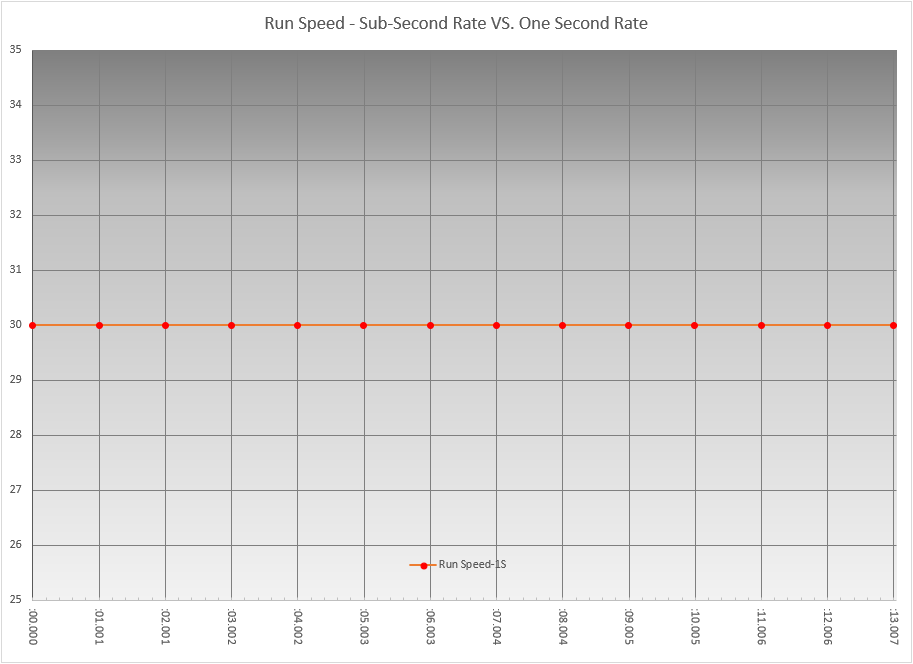
Below is an exaggerated example of missing changes to pipe acceleration (or Running Speed) due to sampling frequency. The data is fabricated, for illustrative purposes.
 

RunSpd-1s


In the image above, the running speed is a straight thirty feet per minute, with a data frequency of one data point per second. Everything appears smooth, with no issues.


RunSpd-SSv1s


In this image, I’ve added sub-second data to show that the smooth, steady running speed was actually not very smooth, it just appears that way due to when the data points were captured.


Because this data is not captured, it is not thought to have occurred. But if you don’t have visibility of it, you can’t know it is there.


The examples above are made up & exaggerated to prove the point. I have seen this play out over different data points in the drilling arena.

When we were first attempting to develop the Applied Fluids Optimization service, our original software would calculate tripping hydraulics at a one second frequency, but would only capture the data at a thirty second frequency. Running speed spikes would lead the software to calculate and display large pressure variations. When we would try to show these excursions after the fact, we could not because the thirty second frequency did not coincide with the actual deviations.

One more fluids-related example: Fluid density on a land rig. Land rigs are an exercise in economy, from an offshore drilling perspective. The rig crews are smaller, so there are less people to do a set number of jobs. The mud pits are smaller, contributing to the total circulating system being smaller. Because of this, it allows for less significant events to impact the fluid properties. The derrick hand is busy? He can’t dust up the density. The shaker hand is up on the floor making a connection? He didn’t adjust the flow on the shakers. Small system, less attention, more chance for changes.

The mud engineer, (person responsible for keeping the drilling fluid running within specifications), should be running four mud checks a day. So, we should see, at minimum, four density measurements…one every six hours. When we were conducting field testing on the DRU, we noticed that we had lots of variation and excursions in the density reading from the DRU where the mud engineer’s data showed fairly smooth trends. When we overlaid the two data sets, the mud engineer’s data matched almost exactly with the DRU readings, just that it missed the excursions.


Takeaways

  • More frequent data helps you to better understand what is going on
  • Depending on the environment, a data curve may need a higher frequency
  • Some data does not need to be high frequency
  • Choose your data focus wisely


And, as always, let me know what you think in the comments. Ask questions, tell your story.

If you like my posts, please share them with others and subscribe to this blog.

REI – Rehabbing A Property: Flipping VS. Renting

Welcome back to me! I was out for the last few weeks due to a combination of work and getting post-surgery treatment for my thyroid.

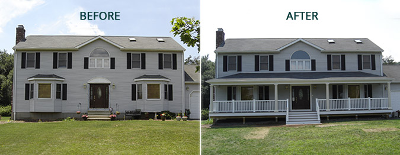
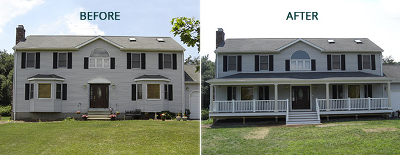
Today, I am going to go over some differences and similarities between rehabbing a property to flip it and rehabbing a property to retain as a rental.


home-exterior-renovation


Compare & Contrast


What is your “Plan A” for a property in a given situation? That is probably an easy question to answer if you only flip properties or if you only buy and hold them as rentals. Some investors do both.

Ultimately, you should already know what you want to do with your property. Then work on a “Plan B” and “Plan C”, just in case your Plan A doesn’t work out.


Compare


Whether rehabbing a property as a flip or as a rental, there are a lot of things that you would do the same in either case. Getting the main home systems in working order, such as plumbing, electrical, roof, HVAC, etc. You need these systems in working order and, with the exception of fixtures, don’t need a lot of variation between the two.

Structures should be stable, rooms may need to be added, and/or rearranged.


Contrast


Rentals

When rehabbing rentals, you want to keep things functional and not too expensive. Depending on the comparable quality of the neighborhood, you may go utilize a higher-end product in a higher-end neighborhood than you would in a lower-end neighborhood.

Especially if you have multiple rentals, you want to go for consistency to normalize your costs. Have a paint scheme, flooring style/type, appliance set, and plumbing & lighting fixtures as a standard so that time will not have to be wasted on trying to decide on colors & styles during rehab and turnovers. Your contractors or turnover specialists should already know what to use.


Flips

When flipping, you are attempting to renovate the property to a standard that will make someone want to buy the home to live in. With that in mind, you want to add finishing touches to a flip that you would not consider for a rental. This could include things like upgraded appliances, fancier light fixtures, premium paint schemes, and so on.

All of this assumes that you have the budget to achieve this and still make money on it.

I would like to know more about my readers. If you could spare about 2 minutes of your time, please take a survey to tell me what you like about the blog. Just click here to take the survey.

Plans B and C

I mentioned “Plan B” and “Plan C” above, so I just wanted to touch on that before wrapping things up. You should always have an exit plan. Or two. If you are planning to flip, be ready to rent or owner-finance. If you and planning to rent, be prepared to sell.

This is kind of second nature to me coming from the oil and gas industry. It has a direct physical basis, but can be applied metaphorically to pretty much anything.

Having an exit plan means not being stuck in harm’s way. When working on a drilling rig, this has life or death implications. Never put yourself in a corner where you cannot get out of the way of something.

I learned this the hard way when loading eleven and three-quarter-inch casing onto a boat when I first started out in the industry working as a roustabout.

For those of you who don’t know what casing is, it is the large-diameter pipe used to keep the wellbore pressure in and the formation pressures out when drilling and producing a well. Each forty-foot joint weighs approximately two thousand four hundred pounds.

The crane was set up to pick up four joints of casing at a time. Additionally, we were short-handed, so I would hook up the casing on the dock, then jump to the boat to help position it on the deck of the boat so it would stack properly for the ride out to the rig.

On one of the lifts, by the time I got onto the deck of the boat, the pipe was coming towards me and I did not want to be under ten thousand pounds of steel. I attempted to get outside the range of the swing of the crane, but realized that I had no more deck because we were loading onto the stern now.

I dropped down onto the deck, sitting, so that at least if the load dropped, the railing would help stop it from crushing me. I believe that maneuver startled the crane operator and he stopped the crane rotation, thus setting the load swinging like a pendulum. He immediately noticed this and started to drop the load as it got over the deck, but the casing had started to swing back towards the stern, where I was sitting.

The casing made contact with my left shoulder and chest. Luckily, it was only enough to bring out purple, yellow, and green bruises on me the next day, but no permanent damage.


The moral of the story? Have an exit plan that you can execute on.


And, as always, let me know what you think in the comments. Ask questions, tell your story.


If you like my posts, please share them with others and subscribe to this blog.

Business – Optimizing A Process – Order of Operations Related to Surgery:

This week I am touching on the topic of process optimization. This is another topic that came a conversation between Kevin@deliberateconsulting.com and myself when comparing thyroidectomy procedure results and side effects. He was diagnosed with thyroid cancer and had surgery a couple of months prior to my diagnosis.

Process-Optimization

We compared notes on what was similar and what was different between the two.

(Caveat: There may be some factors that we are not aware of, specific to each of us as individuals, that could have influenced decisions made.)


We both had thyroidectomies. Surgery, an overnight stay. A vacuum bulb to drain the incision area. Released the next morning. Then wait to determine if further treatment is necessary to ensure the eradication of cancer. In Kevin’s case, he needed further treatment, in my case, it is too soon to tell.

The doctors started Kevin on hormone replacement therapy almost immediately after surgery, then had to wait for levels to drop to begin the secondary treatment. I am still not on any replacement hormones until they determine if I need the radioactive iodine ablation, thus shortening the cycle time to start. Since the hormones appear to last about 6 weeks, I am good for a while with no replacements and won’t have to wait for levels to deplete if I do need the RAI.

The way my surgeon planned things seems to be the more efficient way to do things. This got me thinking about how an optimized process for business is cheaper and more efficient than just randomly doing things in a haphazard manner.


I do this in my real estate investing. When rehabbing a property, I evaluate what needs to be done & plan the order of operations so that there won’t have to be re-work because something had to be undone to do something else.


You can look at your business processes and optimize them for efficiency by ensuring the order of operations for each step does not additionally delay some other step.


You can think of it like the sandwich-making analogy I used here…if your current process calls for you to put the peanut butter on the plate, then add the bread, then the jelly or jam, you can optimize it by changing the order of operations to bread, peanut butter, jelly, then another slice of bread.


What inefficient processes have you identified in your business or workplace? How did you change them?


And, as always, let me know what you think in the comments. Ask questions, tell your story.


If you like my posts, please share them with others and subscribe to this blog.

Business – Revisiting the E-Myth Revisited

Welcome back! I was talking with Kevin@DeliberateConsulting.com about things we should do differently in our business (disclaimer: Kevin & I are partners/investors, along with others, in a high-end door manufacturing business). One of the things he brought up was that all of the partners should have read Michael Gerber’s “The E-Myth Revisited: Why Most Small Businesses Don’t Work and What to Do About It” [http://a.co/d/5JhEnwk] before we decided to invest in a business. Kevin also suggested I write a blog post about it and how it can help you in business.


The E-Myth Revisited


emyth


The E-Myth Revisited is a wonderful book that provides guidance for individuals having an “Entrepreneurial Seizure” as the book’s author, Michael Gerber, puts it. It provides a mix of case history, told as an on-going narrative of a client, and guidelines for successfully organizing an entrepreneurial idea into a business operation manual. It tells how you should work ON your business before you work IN your business. AND, your goal should NOT be an employee of your business, doing things yourself.


I’ve mentioned the E-Myth before:

BUSINESS – WE DON’T NEED NO STINKING PROCESSES!…OR DO WE?

MY RESPONSES TO TIM FERRISS’ “TRIBE OF MENTORS” QUESTIONS


I would like to know more about my readers. If you could spare about 2 minutes of your time, please take a survey to tell me what you like about the blog. Just click here to take the survey.


Business Buying, Two Years Post-E. Seizure


I did not read the E-Myth until after we had already purchased the business and were off to the races. I shared it with the other investors, indicating how important it was that we follow its recommendations. Kevin read it and as indicated by the prompt for this post, he feels the same.


Looking back, I have to agree with Kevin. We should all have read the book before deciding to buy a business together. We did not understand how to operate the business. What little “processes” we received from the previous owner were a jumbled bag WTF? and Huh? And, on top of that, the partner directly involved in the business adopted everything wholesale, becoming too mired in the day-to-day to view anything strategically.


This is exactly what the book is designed to avoid. If we had spent more time understanding how the business operated and put in systems & processes to optimize its operation prior to purchase, we would be a lot further ahead.


We are slowly getting things on track and working to bring efficiency to the operation. Only time will tell if we will be successful.


Lessons Learned


Kevin and I are starting to collect lessons learned so we can apply that to future business endeavors, investment advice, and consulting efforts.


Below are some, in no particular order:

  • Read the E-Myth Revisited
  • Put together your operating manual
  • Understand you costs
  • Create an operating agreement defining who will do what
  • Stick to your operating agreement
  • Understand Cash Flow


Please email me, comment below, contact me on LinkedIn, Twitter, or my Facebook page to share your Lessons Learned in operating a business.


And, as always, let me know what you think in the comments. Ask questions, tell your story.

If you like my posts, please share them with others and subscribe to this blog.
Personal Improvement-Why a “Why Me?” Attitude Doesn’t Help

Apologies for the sporadic posting. I kind of have a little more than usual to deal with. A few weeks ago I was diagnosed with thyroid cancer. And I go under the knife tomorrow morning to have it removed. It was caught very early and the outlook is very good. I busied myself getting work, home, and other segments of my life prepared to weather my hopefully short recovery.

Because I have this going on in my life, I decided to take the opportunity to go over handling bad news or adverse situations.

StillLifeWithASkull

“Still Life With A Skull” By Philippe de Champaigne – Web Gallery of Art:   Image  Info about artwork, Public Domain, https://commons.wikimedia.org/w/index.php?curid=369918

Why ME?

What is the first thought that comes to mind when something bad happens to you?

Do you immediately think “Why ME?” Do you look for reasons, actions, or people external to yourself to place the blame for the bad news?


I used to. My first thought would be “Why do I have such bad luck?” or “What did I do to deserve this?”

I eventually realized that no matter how much I worried or wondered or looked for blame, it did not better the situation.


Why “Why ME?” Doesn’t Work

The only thing to come out of it was that I added anxiety and stress on myself. This is not good for a  person mentally or physically.

I think part of my realization of this was when I was about eleven or twelve years old. My parents were divorced and my father would arrange to take us for the weekend. Then he would not show up. After many times of packing a bag for the weekend, waiting all weekend for my dad to show up, then, on Sunday night, unpacking the bag because Dad never showed up or called, I finally realized that there was nothing I could do about it, so there was no point in making myself sick worrying about it.


I was a much happier person once I gave up worrying if he was going to show up or not. I reasoned, to myself, “He is still my dad. I will still love him. But I won’t trust or rely on him to make me happy.”

This approach of not allowing worry or anxiety to add stress to your life is very similar to the Serenity Prayer.

My take on the Serenity Prayer is:

Change the things you can

Don’t worry about the things you can’t


MementoMori

Memento Mori

Another way to approach this is as Stoics do…remind yourself daily of your mortality. There are variations on how to do it, but most involve asking yourself if any of what is bothering you will matter when you are dead.

It also helps to keep ego out of any decisions.


Tying back into what I currently have going on, I can’t influence the outcome of this surgery. The “after” will be only slightly different from my current lifestyle. A few more pills added to my daily regimen, the same doctor overseeing my diabetic care will also oversee my thyroid care (he is a top endocrinologist).

I am lucky because I only have thyroid cancer. It is slow-growing, does not spread like other cancers, and we found it very early, by accident.  I currently have at least 5 friends that I can recall off of the top of my head who are dealing with various types of more serious cancers that could be/are life-threatening, in the near-term.


In summary, if you take anything away from this post, follow these rules for life:

Change the things you can

Don’t worry about the things you can’t


And, as always, let me know what you think in the comments. Ask questions, tell your story.

If you like my posts, please share them with others and subscribe to this blog.
Personal Finance – What Can I invest In?

This week we are talking about different types of investments that you can utilize to better your personal finances. I’ll briefly touch on traditional investments (stocks, bonds, etc.), investing directly into a business, and various forms of real estate investing.

Additionally, I would like to give a shout-out to @DeliberateKevin for the guest post last week. Go check out Deliberate Consulting.

FinChart1

“Traditional” Investments

Traditional investments are what most people usually think of when they think of “Investing”. This can be stocks, bonds, Exchange Traded Funds (ETF), etc.

There are three main approaches you can use:

  • Investment Advisor
  • Robo Advisor
  • DIY

TraditionalInvestingRiskChart

Investment advisors usually handle clients’ money for a fee. In most cases, that fee is a percentage of the total portfolio balance. Additionally, unless the advisor has a fiduciary duty to you, the investor, they may push you towards investments where they get better or additional commissions, as opposed to investments with less fees and/or commissions involved. Also, you need a sizable balance to start your account, say, in excess of $500,000.


Robo Advisors are basically algorithms that select the best investments based for you based on many criteria. They usually invest in ETFs and can automatically do things like rebalance portfolios, automate tax loss harvesting, etc.  They tend to operate on a fractional percentage commission, meaning that they are usually cheaper than a full-blown human investment advisor. Robo Advisors will also allow you to start an account with a much lower balance than a traditional financial advisor, with some allowing you to open an account with no money, though you will need to put money in to invest.


DIY or Do It Yourself is another approach you can take. It costs you no fees other than trade fees and you don’t need a large balance to start. But, you will have to spend a lot of time researching your investments and deciding where to put your money. You can start with as little as the price of a single share of stock and the trade fee.


I would like to know more about my readers. If you could spare about 2 minutes of your time, please take a survey to tell me what you like about the blog. Just click here to take the survey.


Direct Business Investment


You can invest into a business outside of stock. This can be in the form of buying a franchise, buying a share of an existing business, or even taking your non-retirement account money and opening a business. A word of caution: Be sure to perform thorough due diligence into any business you invest in like this and if investing with partner(s), ensure you have a sound operating agreement in place and that everyone abides by it.

See more on starting a business with partners: BUSINESS STARTUP: 9 TIPS FOR STARTING A SMALL BUSINESS WITH PARTNERS


If you only have retirement account funds available, either from a 401k from an previous job or an IRA (Individual Retirement Account), you have the option to buy or start a business using those funds through a Rollover Business Startup (ROBS) transaction, also known as Business Owner Retirement Savings Account (BORSA). This allows you to utilize the money you have saved to start a business without incurring taxes or penalty. There are specific restrictions that go along with it and it has to be administered by a qualified group. Companies like DRDA and MySolo401k can help you deal with this type of thing.

FinChart2


Real Estate


The last type of investing option I am going to talk about is real estate. As I have talked about before, I like investing in real estate, in addition to other types of investing. Real Estate has options that range from very hands-on and intensive involvement to very passive hands-off approaches.


Direct Investment – Real Estate

If you have money sitting around, or you decide you want to follow the Tim Ferriss approach and dreamline a muse to support real estate investing, you have lots of options.

You can wholesale, which is finding people with a need or desire to sell a property that doesn’t qualify for traditional financing or need the funds in a short time period (need a quick closing).

You can Fix and Flip. This involves buying a distressed property at 30% or more below market value (where market value is considered the after-repair value or ARV) and rehabilitating the property, then selling it at or near market value.

You can also buy and hold, the term for investors that buy property with the intention of renting it out over the long term. Generally, these investors like to acquire their properties in a similar state to the Fix and Flip investors, but do not sell the properties.

A less well-known approach is to invest in Notes. These are mortgages that the banks sell off at a discount to get their capital back & re-deploy it in another loan. There are note funds in addition to you being able to buy notes directly.

Most note funds require that you be a sophisticated investor. No, that does not mean that you have to drink your tea with your pinky out and wear a three-piece suit every day. It is a category defined by the government as having an income of $200,000/year if single, $300,000 if married, OR $1,000,000 in net worth, not including your primary residence.


Self-Directed IRA – Real Estate

Like the ROBS/BORSA methodologies mentioned above for direct business investments, there is a self-directed IRA (SDIRA) that can be used to invest in real estate. They can be used to buy investment properties or, in some cases, to actually BE a “bank” of sorts.

Some caveats with using an SDIRA to buy investment property: You cannot take advantage of depreciation on the property, so you lose out on some tax benefits; You cannot receive any immediate benefit from the investment. All returns from the investment belong to the SDIRA.


Another option is to become a private lender. Basically, you are becoming the bank, lending money on a short-term basis, to a real estate investor. They benefit from quicker and usually cheaper closings and you as the lender benefit from the interest earned by lending the money, which usually is more than you will make in the bank or other investments.


Hopefully giving you this overview of different types of investing will help further your knowledge and be a starting point for your own investigation into how best to invest your money.


And, as always, let me know what you think in the comments. Ask questions, tell your story.

If you like my posts, please share them with others and subscribe to this blog.
Personal Improvement -Inigo’s Guide to Networking Success (A Guest Post by kevin@deliberateconsulting.com)


This week I am bringing you a guest post from Kevin Paylow (kevin@deliberateconsulting.com), Consultant & Corporate Storyteller, Certified Corporate Storytelling Instructor, Innovation Consultant, Message Consultant, Strategy Consultant. 

https://www.deliberateconsulting.com/


I saw this meme on Facebook and thought it was too good not to pass along.

IGTNS


Plus what kind of maniac doesn’t enjoy a good Inigo Montoya cultural reference?

But the advice here is great… though points 3 and 4 need to be fleshed out a bit.

Your personal link probably isn’t “You killed my Father”. Instead consider sharing WHY you’re at this particular networking event.

Except for some extreme situations, “Prepare to die” isn’t the best way to manage expectations. Instead tell them how you hope you can both benefit from meeting.

“Hello. My name is Kevin Paylow. I came to meet and hear the latest thinking from other innovators. I’d like to learn about you and your business and see if there’s a way for us to work together.”

Of course, this is just your introduction. I recommend planning ahead for extending the conversation – read this blog post I wrote a few months ago for some ideas.

Good luck!

Kev


REI – An Unstructured List of Why Real Estate Investors Attend REIA Meetings:


This week, I am covering REIAs. I will go over what a REIA is, how REIAs can benefit you if you are interested in investing in real estate, and how to find a REIA in your area. I will also provide details on how to find out about the REIA for the Houma/Thibodaux/Morgan City area.


REIA stands for Real Estate Investor Association. This is a group of like-minded individuals who get together to learn about, discuss, and network over Real Estate Investing.


What is a REIA?


REIA stands for Real Estate Investor Association. This is a group of like-minded individuals who get together to learn about, discuss, and network over Real Estate Investing. From my experience, REIAs are for anyone with an interest in Real Estate Investing (REI), from rank “noobs” to experienced real estate investors.

Meetings usually cover a topic for education on some aspect of Real Estate Investing, such as Tax implications (by an accountant), things to include in your lease (by a real estate attorney), and ensuring a property has a clear title (by a title expert).

Real estate investors also get the opportunity to network with one another. This provides opportunity to learn from each other and can also facilitate deal making. Investors have the opportunity to buy, sell, or trade deals with each other.

Some REIAs do charge a meeting attendance fee to cover a room rental and/or snacks and refreshments while others are in freely available spaces. Some are also held in meeting rooms at restaurants where in exchange for bringing in the group to eat, the room is available for use.


I would like to know more about my readers. If you could spare about 2 minutes of your time, please take a survey to tell me what you like about the blog. Just click here to take the survey.


What can a REIA do for ME?


REIAs are a place to learn. They provide education on many different real estate topics. As stated above, many REIAs bring in subject matter experts to present to the group. These experts are also available for Q & A.

Some REIAs have sponsors who provide REI-specific services, so that allows members to save time in finding said services. These range from title companies to construction contractors & beyond.

There are also likely to be wholesalers at meetings with properties that are for sale at a discount, in addition to investors shuffling their properties.


How can I find a REIA?


A lot of REIAs use Meetup.com to list and promote REIA meetings. Go there and search for REIA and your town name. You can set a radius distance from your target location so it will show meetups within that range, in the event there is a meeting in the next town over. When you find one you want to join, join the group and RSVP for the next meeting. It’s as easy as that.


Are you in the Houma/Thibodaux/Morgan City area?


If you are in the Houma/Thibodaux/Morgan City area, you are cordially invited to join the Bayou Real Estate Investor Networking group. Meetings are usually held on the first Wednesday of the month. Go to the BREIN Meetup page for more information.


And, as always, let me know what you think in the comments. Ask questions, tell your story.


If you like my posts, please share them with others and subscribe to this blog.

Verified by MonsterInsights