Archives 2018

Tips for Tenants When Renting

Below is a list of recommendations for tenants from an article by NOLO Press. (Click the link to read the full article and see respective offerings from NOLO.) Each has a short description from the article. In addition to that, we have added further commentary from JJR Holdings’ perspective.

  • Bring your paperwork.

The best way to win over a prospective landlord is to be prepared. To get a competitive edge over other applicants, bring the following when you meet the landlord: a completed rental application; written references from landlords, employers, and colleagues; and a current copy of your credit report.

JJR Holdings: Showing up with a completed rental application and any supporting documentation definitely helps to ease tenant screening and cut down decision making time. It also demonstrates that you are a responsible person.

How to Get a Copy of Your Credit Report

You can order your credit report by mail, phone, or online at www.annualcreditreport.com or directly from the websites of the three major national credit bureaus:

Equifax: www.equifax.com

Experian: www.experian.com

TransUnion: www.transunion.com

  • Review the lease.

Carefully review all of the conditions of the tenancy before you sign on the dotted line. Your lease or rental agreement may contain a provision that you find unacceptable — for example, restrictions on guests, pets, design alterations, or running a home business.

JJR Holdings: We like to review each clause of the lease to ensure there are no misunderstandings on responsibilities on our side as the property manager or your side as the tenant.

  • Get everything in writing.

To avoid disputes or misunderstandings with your landlord, get everything in writing. Keep copies of any correspondence and follow up an oral agreement with a letter, setting out your understandings. For example, if you ask your landlord to make repairs, put your request in writing and keep a copy for yourself. If the landlord agrees orally, send a letter confirming this.

JJR Holdings: We are set up to communicate via email, text, and telephone. We prefer to use email and text specifically for documentation purposes.

With regards to requesting repairs or maintenance, we have an online maintenance request form. All you have to do, as a tenant, is go to the form, fill out the information, and we will arrange for an appropriately quick remediation.

  • Protect your privacy rights.

Next to disputes over rent or security deposits, one of the most common and emotion-filled misunderstandings arises over the tension between a landlord’s right to enter a rental unit and a tenant’s right to be left alone. If you understand your privacy rights (for example, the amount of notice your landlord must provide before entering), it will be easier to protect them.

JJR Holdings: We respect the privacy of our tenants and generally leave them alone. When we do need to enter a dwelling, we provide a minimum of 24 hours notice, unless it is an emergency or the tenant has requested an immediate visit.

In the event of contractor-provided services, such as air conditioner repair or pest control, the individual providers coordinate directly with you, the tenant, to arrange scheduling.

  • Demand repairs.

Know your rights to live in a habitable rental unit — and don’t give them up. The vast majority of landlords are required to offer their tenants livable premises, including adequate weatherproofing; heat, water, and electricity; and clean, sanitary, and structurally safe premises. If your rental unit is not kept in good repair, you have a number of options, ranging from withholding a portion of the rent, to paying for repairs and deducting the cost from your rent, to calling the building inspector (who may order the landlord to make repairs), to moving out without liability for your future rent.

JJR Holdings: We, as the property manager, strive to provide out tenants with a comfortable, habitable place to live. To do this, we take maintenance and repairs seriously and request that you, as the tenant, report all maintenance issues, as defined by our lease, to us immediately using the maintenance request form, mentioned above.

  • Talk to your landlord.

Keep communication open with your landlord. If there’s a problem — for example, if the landlord is slow to make repairs — talk it over to see if the issue can be resolved short of a nasty legal battle.

JJR Holdings: We encourage communication, even if it is only an email or text saying everything is hunky-dory.

  • Purchase renters’ insurance.

Your landlord’s insurance policy will not cover your losses due to theft or damage. Renters’ insurance also covers you if you’re sued by someone who claims to have been injured in your rental due to your carelessness. Renters’ insurance typically costs $350 a year for a $50,000 policy that covers loss due to theft or damage caused by other people or natural disasters; if you don’t need that much coverage, there are cheaper policies. For more information about renters’ insurance, see this previous post on the subject.

JJR Holdings: While we don’t require tenants to hold renter’s insurance, we strongly urge it, as it protects you form damage and liability.

  • Protect your security deposit.

To protect yourself and avoid any misunderstandings, make sure your lease or rental agreement is clear on the use and refund of security deposits, including allowable deductions. When you move in, do a walk-through with the landlord to record existing damage to the premises on a move-in statement or checklist.

JJR Holdings: We use a move-in check list to document the condition of the rental as we go through it with the new tenant. We also document the whole property with video and save it, along with the check list, to ensure that we don’t forget about the condition of something when settling repairs against the tenant’s security deposit after move-out.

  • Protect your safety.

Learn whether your building and neighborhood are safe, and what you can expect your landlord to do about it if they aren’t. Get copies of any state or local laws that require safety devices such as deadbolts and window locks, check out the property’s vulnerability to intrusion by a criminal, and learn whether criminal incidents have already occurred on the property or nearby. If a crime is highly likely, your landlord may be obligated to take some steps to protect you.

JJR Holdings: We do our utmost to ensure our tenants’ safety. We provide deadbolts and/or a secondary locking mechanism for all doors on our properties.

  • Deal with an eviction properly.

Know when to fight an eviction notice — and when to move. If you feel the landlord is clearly is the wrong (for example, you haven’t received proper notice, the premises are uninhabitable), you may want to fight the eviction. But unless you have the law and provable facts on your side, fighting an eviction notice can be short-sighted. If you lose an eviction lawsuit, you may end up hundreds (even thousands) of dollars in debt, which will damage your credit rating and your ability to easily rent from future landlords.

JJR Holdings: We don’t like evictions and do our best to avoid them.

Overspending, Why And What to Do about It


This week, we are going to talk about spending, spending habits, and debt. As I related in a couple of previous posts, My History With Money, Pt. I & My History With Money, Pt. II, I had a bit of a spending problem. While the majority of my debt was from my mortgage, I was having trouble keeping up with payments and just keeping cash on hand. Hopefully, I will be able to provide you with some insight into why we spend and get into debt.

First, here are some statistics I gathered on income and spending in the US:

  • The average pre-tax income for people living in the US in 2016 was just under $75,000.
  • The average annual expenditures for people living in the US in 2016, including food, housing, transportation, discretionary spending, and insurance was slightly over $57,000.
  • Add to that, the average amount of taxes paid between local, state, and federal in US as of last year is about $10,500.
  • What you wind up with is about $8,000 a year (or $666.67 per month) of savable/investable income, based on averages.

The problem with averages is that it smooths out all of the variations in the data. In simpler terms, not everybody can recognize that excess money at the end of the year.

Here’s another bothersome statistic: 43% of Americans in the US spend more money than they make, according to the Federal Reserve.


The most common reasons people spend more than they make.

How to address the reasons listed above

If you are in the situation where you are spending more than you make and/or are in a lot of debt, the first thing to do is commit to changing your habits and then doing some things to change your situation.

Budgeting:

Be aware of what money you have coming in and what money you are spending. Break out your spending between necessities and discretionary. Necessities are electricity, water, gas, mortgage/rent, food, transportation. Discretionary spending covers items like cell phones for every member of the family, cable, internet, visits to the casino, cigarettes, beer, and similar things that are not vital to your survival.

Figure out approximately what percentage of your monthly income is needed to cover each necessity and allocate a little more than that requirement to be put aside to cover each one. I suggest putting cash into envelopes labeled for each one. By putting a little more into the envelope, that will help to cover variances in income and costs. This idea is actually based on the ideas put forth in the book Profit First by Mike Michalowicz. The book is aimed at entrepreneurs trying to get their business to a profitable state, but the principles apply to personal finance, also.

They KEY thing is to not touch the money once you put it aside unless you are paying the bill it is dedicated to.

Make sure you are also able to put aside an emergency fund. The amount should be approximately three times your monthly income/take home pay. This goes a long way towards keeping your life steady in the event of bad weather, vehicle breakdown, illness, etc.

Try to stick to only spending on necessities until you are comfortably out of debt. Then start looking for ways to invest some of your “profit” to make you more money. (Since I am not a financial advisor, I can’t offer advice on how to invest that money, but I will cover my thoughts on the matter in a future post.)

Credit cards: 

Only use them if you have the money to pay for what you are purchasing and can commit yourself to not spending the cash on anything other than paying your credit card bill.  If you have a balance on your credit card, don’t use it at all until the balance is paid off. Only then should you use a credit card to buy stuff.

If you already have a balance on your credit card or even multiple cards, work on paying off those balances first. There are two approaches to methodology when doing this, either start paying extra on the card with the highest interest rate and balance, if you can make yourself do that regularly without getting disappointed or pick a card with the smallest balance and pay it off first. This will give you a self-esteem boost by way of accomplishment.

DON’T PUT ANYTHING ELSE ON THAT CARD!

After the first one is paid off, take the monthly allotment of your income that was dedicated to paying off that card and start adding it to what you are paying on the next card. Keep doing that until all of your cards are paid off.

PAY OFF YOUR BALANCE EVERY MONTH!

This is crucial for not accumulating debt. It may even be better for you to have a charge card like American Express, where you are required to pay it off every month.

Don’t “float” your balance from one new card to another without paying it off. It ends badly.

Psychological Reasons for Spending


We are constantly being bombarded with advertising trying to influence us to spend money. Whether it is buy a new car, get the latest phone, or use our credit card to buy your dreams. Advertising implies that if we don’t spend, we are a lesser person. Don’t believe it!

Yes, you do need some of the things you see advertised, but you don’t need to go broke or get in debt to get it.

Buying things to feel better about yourself actually make you feel worse in the long run.

DO something to change the things in your life you don’t like. Don’t waste time worrying about the things you can’t change, because it will only make you feel worse.

And, as always, let me know what you think in the comments. Ask questions, tell your story.

If you like my posts, please share them with others and subscribe to this blog.

REI: Kick Yourself in the Ass Gotchas

Image from US Patent #6,293,874…”User-operated amusement apparatus for kicking the user’s buttocks”

Today I am going to cover some things that we experienced last year while rehabbing a house acquired to become a rental.

This was our first acquisition, so I wanted to be thorough in analysis, planning, and execution. I had a home inspector check for problems with the house. He checked the electrical, cooling, foundation, plumbing, water heater, and roof. Issues were pointed out with the electrical, gas valves, air conditioner ductwork, and a couple of other minor things.

I brought in the following for estimates:

  • An electrician to fix the issues pointed out by the inspector and to add GFCI outlets near the sinks.
  • A plumber to replace supply valves & faucets in the kitchen and bathroom, gas supply valves for the stove and water heater, and to re-route the overflow drain for the water heater.
  • A HVAC contractor to replace the ductwork.
  • Multiple contractors to bid on the rest of the rehab stuff.

I thought I had things well covered. I was wrong. The first shock was that we had to replace the whole interior HVAC system. The furnace part was rusted through and a fire hazard. That wasn’t too bad, as we had a buffer in our budget for overages and $4,200 wasn’t going to kill it. (That price did include replacing the duct work.)

The next surprise was after the first tenants moved in, they attempted to wash clothes and the washer drain overflowed into the utility room. A phone call to the plumber and a day of trying to unclog the drain, it was determined that years ago, when the neighborhood was converted over to municipal sewerage, the original owners never bothered to tie in the utility room drain to the main drain line and just left it connected to the main field drain in the back yard, which had since collapsed, thus restricting flow and backing up into the utility room. Add another day for the plumber to route a drain through the wall and across the back patio (most likely the condemned septic tank) and tie it into the main drain line at a total cost of approximately $700.

Caveat: We will have to eventually add a full drain line underground tied into the main system

#SilverLining: We will now have the drain necessary to convert part of the utility room to a half bath at some point, increasing the value and desirability of the property.


At one point, the original owners of the house upgraded the windows to vinyl double-paned glass. In doing so, there were gaps in between the windows and the sill in some rooms. I notice them, but in triaging everything that needed to be done, they kept falling to the bottom of the priority list. And, they never got done. Additionally, we kept finding wasps in the room where the gaps were the biggest. It seemed unrelated. The tenants actually correlated the gaps with the wasps continuously appearing in that room and asked for me to fix it. It didn’t take more than some expanding foam and caulk, but, like the other items listed here, I should have recognized the issues and fixed them prior to the tenants moving in.  Total cost for the fix: about $25.

So, for the next property we purchase, I will make sure that we check all drains for restrictions, ensure all trim are sealed, and plan to continue to have the HVAC contractor evaluate the heating & cooling system. This will help to save extra work that we did not budget for and aggravation for us and the tenant in getting the issues mitigated.

If you have rental property, have you run into things like this? Let me know in the comments below.

And, as always, let me know what you think in the comments. Ask questions, tell your story.

If you like my posts, please share them with others and subscribe to this blog.

Equipment Automation – Drilling Fluids

Various pictures of industrial and oilfield automation. The bottom center, top center, and bottom right images are of the DRU.


Today’s topic has to do with Equipment Automation, and more specifically, Drilling Fluids Equipment Automation.
First, a brief history of drilling technology:
  • Early drilling systems used the equivalent of a heavy chisel hanging on a cable down in a hole to “drill” for oil. The “cable drill” would be raised and lowered rapidly to break the rock, thus deepening the hole.
  • Later systems put a bit on the end of lengths of pipe and rotated the pipe to deepen the hole.
  • Drilling fluids were introduced to cool & lubricate the bit and carry the cuttings out of the hole. They were consisting of water and other chemicals to maintain density and viscosity.
  • Invert Emulsion Muds (IEM) were later developed to further inhibit interaction between the drilling fluids and the formation being drilled.


The main tools used to maintain the drilling fluids were a rheometer, a tool developed to test the viscosity of paints to ensure the pigment particles remained suspended, and the mud balance, a tool used to measure the density of a fluid.
***The above history does not contain all innovations, reasons, or details***
Up until 2015, the mud balance and the rheometer were still the two main tools used to monitor the properties of drilling fluids. They additionally use other tools, such as retorts to determine the fractional content of oil, water, and solids in a fluid, chemical titration to test things like alkalinity, calcium content, & chlorides content, in addition to HTHP filter press, a tool used to measure how much of the liquid portion of a drilling fluid will “leak out” through a porous medium, usually filter paper, across a standard differential pressure.
Prior to 2015, quite a few companies have worked on automating drilling fluids testing, including the company I work for, Baroid, a part of Halliburton.
**Disclaimer: I am part of the group that worked on this**
The testing covered varied from density meters to simulated viscosity to solids analysis. The main issue was that the results were either inaccurate or the specific test itself was not necessarily a must-have.
We initially built or had built various automated prototypes of testing apparatus. One was a fully automated retort. If you are not familiar with a retort, it is designed to bake the liquid out of a measured volume of fluid at a high enough temperature to also separate out oil and water content. This test allows drilling fluids engineers (or mud engineers) to determine how much oil, water, and solids are in a fluid. It also allows them to calculate the amount of high gravity solids (desired) and low gravity solids (not so desired) contained within the fluid. The approach the company we contracted for a prototype took was to just automate the manual process. So the result was a big box that took in a measured amount of fluid, cooked off the liquid, reheated the liquid to separate the oil and water, then used LASERS! to measure the amount of oil and water.
They had also included a mini-CNC arm inside the box, specifically for the cleanup part. It would pick up a “retort spatula” attachment to scrape the dried mud residue from inside the retort cell, then it would pick up the wire brush attachment to get the final bits of dried mud from the cell walls. There was a vacuum component that sucked up all of the dried mud residue and dust while the cleaning operation was going on. It was kind of amazing to watch!
Alas, as amazing as it was to watch, it was not practical as a field application precisely due to the amount of moving parts…there were way too many things to break down. Too many things needing hands-on attention during its operation. When a piece of equipment like this is sitting 100 miles offshore, that is too isolated to be able to send someone every couple of days to clean it out or fix something.
We realized that we needed to focus on the critical measurements for running drilling fluids. The properties measured on the most frequent basis are density and rheology. Additionally, as part of the automation strategy we developed, density, rheology, and fluid temperature are the primary inputs for our real time drilling and hydraulics simulator.
Our first unit was dubbed RTDV, Real Time Density & Viscosity. It was a good start, but was not able to provide us with accurate results. Based on extensive analysis of the RTDVs operation, we started a redesign project based on lessons learned. The biggest issues were lack of continuous unattended operation, inaccurate rheology readings, and the ability for air or gas entrainment to affect the density readings.
The next generation unit was named DRU or Density Rheology Unit. It captures a pressurized density, approximately every 1-2 minutes, and a full 6-speed rheology every 10-20 minutes, depending on ambient fluid temperatures because it heats the fluid to a set testing temperature.
It was deployed on late 2015 on a commercial basis and received industry press and awards on 2016.
Our goal is to automate all fluid testing. What’s funny is that when we say that, drilling fluids engineers ask if we are trying to get rid of their jobs. That is just short-sighted thinking.
As things currently stand, in a 24 hour period, just to accomplish the standard required tests, it takes about 6 hours. That’s a full 25% of the day spent in a lab, possibly not paying attention to operations. And that is for only four sets of test results.
Yes, there are opportunities to check on things while tests are running, BUT, What if the fluids engineers didn’t have too spend all that time conducting tests? And what if they could see those test results more frequently? How much better could they maintain the fluid properties?
There are other companies coming out with new technology and have the ability to measure a few properties, but I don’t think that they have the broad vision for an integrated suite of sensors in addition to a plan on what to do with the data once it is captured.
But I do.
But we do.
Look to the future…

Let me know what you think in the comments. Ask questions, tell your story.

If you like my posts, please share them with others and subscribe to this blog.

Real Estate Investing: Getting Scammed by a Contractor

Actual picture from one of our properties.

One of the last things you want to do is to get scammed as a real estate investor. It will happen if you are not prepared and do not have systems and processes in place to keep you from getting scammed.

Story Time

When we decided to turn my in-laws house into a rental, we started to look for contractors to do the rehab on it because I was too busy with work to do it myself (and I wasn’t that great at what was needed anyway).
We asked around on Facebook, but didn’t get a whole lot of suggestions. A friend of a relative could do some of it, but we wanted to get someone to do all of the work.

My wife heard an advertisement on a local radio station for a home improvement contractor, so we called him to get a bid. He gave us a fairly cheap bid and said he could start working immediately. We decided to use him. (Mistaken Thinking #1: Since he was advertising on the radio, he must have been a legitimate contractor.) He told us he was licensed and insured, so we believed him (See mistaken Thinking #1). He then asked for a 30% down payment to be able to purchase materials, so we paid him the down payment. (Mistaken Thinking #2: It’s OK to pay a down payment before work starts.) After six weeks of no work being done except removing the one piece of baseboard and shoe molding in the picture above, in addition to him coming to us for additional material draws (that we paid), we finally realized that he wasn’t going to do the work.

We suspected something was up after four weeks, but didn’t want to believe it. Thankfully our state has a contractor Fraud law and between our complaints and complaints of other victims from surrounding area, there was enough to arrest him. He made a plea deal and has paid back almost half of the money he owes us.

Tips for dealing with contractors:

  • ALWAYS VERIFY their state-issued contractor’s license! Your state’s Contractor Licensing Board or a similar entity should have a way for you to verify that the contractor’s license is still active via a website.
  • ALWAYS VERIFY their Insurance Certificate! Call the insurance company and/or agent to verify. These days, anyone can create counterfeit insurance certificates online. Their insurance protects you if one of their employees gets hurt on the job.
  • Check references. You usually will be referred to contractors by other friends or investors who have used them before and can vouch for their work.
  • Sign a contract that details the following: (Disclaimer-I am not a lawyer & I don’t play one on the internet…always check with your own attorney!)
    • Scope of work to be performed
    • When the work will start
    • How long the work is expected to take
    • What milestones need to be achieved, satisfactorily, to qualify for a draw
    • Check on the contractor’s work frequently to ensure timely completion

We eventually found a really good contractor who came in and rehabbed everything in the house for us in about a month for a really good price. And we have been renting out the property ever since.

Let me know what you think in the comments. Ask questions, tell your story.

If you like my posts, please share them with others and subscribe to this blog.

Online Workflow Automation

Left: Manual Process; Multiple queries to multiple parties.
Right: Workflow Automation directs processes smoothly.

A couple of weeks ago, I was looking into tools to help automate workflows, preferably online tools. My initial premise was that I wanted to be able to track steps, tasks, and procedures in our real estate investing.

Some of the tasks can be accomplished by the popular IFTTT service. But what I have figured out is that the majority of what you are able to do with IFTTT is geared towards personal convenience and not business processes.
Initially, I was looking at Microsoft Flow, an online workflow automation tool, but while investigating some the connectors for it, I found some built-in integration capabilities already exist in services like Trello and Slack. So, deeper down the rabbit hole I went.
I was able to set up a Slack workspace and that in itself is a pretty cool tool for facilitating and capturing communications, documents, and other business-related information,in addition to being able to tie in to my G-suite Docs.
I mentioned Trello above. I had looked at them in the past, but had not really found it useful for what I was wanting to do, at initial glance. I also remembered that the manufacturing business we invested in uses it to track orders and everything related to the orders. I contacted the investment partner who had set it up and asked him to explain how they were using it.
It is set up like a Kanban board and as each task or set of tasks is accomplished, it is moved to the next stage in the order process. What I don’t like is that it is not automated. Each “card” (where the order information and communications are captured) is moved manually from one column to the next when someone accomplishes a milestone in the process.
A similar service called Pipefy appears to provide the same Kanban-style setup, but it looks like you can set triggers for the cards to automatically advance from one column to the other. Since I just found it as I am writing this post, I don’t have time to investigate yet, but it looks pretty powerful. I think it has the potential to claim a spot in my workflow automation toolbox.
Anyway, I can visualize building out steps the process across the columns and have each card contain the tasks needing to be completed before it moves to the next column.

The more I thought about this, I realized that by combining Slack with something like Trello for the manufacturing business, we could achieve a few long-term goals. Trello actions could be reported into a Slack channel, giving us, (investment partners), a simulacrum of a real time dashboard of what is going on with orders in the manufacturing business. A similar setup could be made for product quotes. Slack channels could be used for communication between employees, management, and investors, respectively. Other channels could be used for Knowledge Management (KM)…a living archive of answers, best practices,documents, etc. I think I will call that channel #stunt_brain!

There are other options for automation and integrating various online applications like Podio, Zapier, and Zoho CRM. I haven’t played with them much, so I can’t really say a whole lot about them other than they exist.

Hopefully this has given you some insight into what I thought to be cool tools to bring efficiency to your workflow.

Let me know what you think in the comments. Ask questions, tell your story.

If you like my posts, please share them with others and subscribe to this blog.


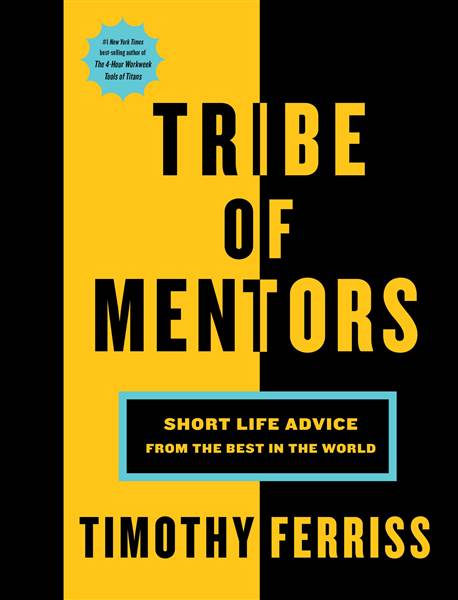
My Responses to Tim Ferriss’ “Tribe of Mentors” Questions

This week, I am going to take a swipe at answering the questions from Tim Ferriss’ book, Tribe of Mentors. These are questions distilled and honed from his interviewing many peak performers on his podcast. AND, just to be clear, Tim Ferriss did not ask me these questions. I thought they were interesting in and of themselves and decided to dedicate a post to them.

What is the book (or books) you’ve given most as a gift, and why? Or what are one to three books that have greatly influenced your life?

I haven’t really gifted many books. But I’m trying to change that. As far as books that have greatly influenced me, I have three. Rich Dad,Poor Dad by Robert Kiyosaki is a really good book for helping you to realize that what you weren’t taught in school about money can hurt you, or at the minimum, make you struggle to achieve your dreams and goals. Depending on your personality, it may rub you the wrong way, but it speaks volumes of truth about making money. The E-Myth Revisited by Michael Gerber provides excellent advice on how to systematize a business so it can run smoothly and grow. And, finally, The 4 Hour Workweek by Tim Ferriss. I really like because it provides you with principles to lead your life by. Mainly, set up a low-input business to pay for your needs, don’t kill yourself working as a trade-off for retiring at a later age, when there is a good chance that you will be too old or sickly to enjoy it. It fosters the idea of continuous “mini-retirements” throughout your life. And most importantly, with all the free time you create, do something important, do something you care about, do something to impact the world in a good way.


What purchase of $100 or less has most positively impacted your life in the last six months (or in recent memory)? My readers love specifics like brand and model, where you found it, etc.

A couple of things I’ve bought have made a positive impact…one is a set of wireless earbuds. I generally have issues with wired earbuds catching on stuff as I walk around or do work, so these are pretty neat in that they do not hang down very far past my neck. The other is a battery pack to charge my phone throughout the day. Depending on what I am doing, sometimes my phone will run down quicker than others. Having the battery pack available to boost it up is nice. Plus,it has enough power to charge the phone twice.

How has a failure, or apparent failure, set you up for later success? Do you have a “favorite failure” of yours?

I don’t really have a favorite failure,because there are too many to choose from! I have many failures, that if they would not have happened,I would not be where I am today. So I guess all of my failures are my favorites? Or better yet,the only real failure is the ones you do not learn from.

If you could have a gigantic billboard anywhere with anything on it — metaphorically speaking, getting a message out to millions or billions — what would it say and why? It could be a few words or a paragraph. (If helpful, it can be someone else’s quote: Are there any quotes you think of often or live your life by?)

If you don’t like something in your life, then do something to change it! If you can’t change it, then don’t waste time worrying about it.

What is one of the best or most worthwhile investments you’ve ever made? (Could be an investment of money, time, energy, etc.)

So far, I would have to say that the most worthwhile investment I have made is buying a door manufacturing company with some friends. To date, it has been a trying experience and has strained some of the friendships,but i have learned more about operating a business in the past 14 months than I have in most of my career working in the Oil and Gas industry.


What is an unusual habit or an absurd thing that you love?

I tend to approach ideas/tasks/goals with lots of technical detail. For example, as a group, my partners and I decided to build a tool for tracking product shipments and invoicing on a per-order basis to allow forecasting estimated revenue. I visualized a quasi-CRM system with lots of inputs that would return lots of information, but what we really needed was just a spreadsheet similar to a Gantt chart to track the information. We will eventually implement a more detailed CRM system, but I over-engineered it in my mind.


In the last five years, what new belief, behavior, or habit has most improved your life?

Two things…realizing that a lot of the decisions I made in my past were most likely influenced by my being infected by the toxoplasmosis gondii parasite, thus helping me to further screen my decisions for risk, and understanding that my outlook / philosophy on life is actually based on stoicism. I don’t know how I arrived at that outlook, but it just made sense to me. Learning more about it has definitely improved how I view the world.

What advice would you give to a smart, driven college student about to enter the “real world”? What advice should they ignore?

Don’t fall into the mindset trap of working most of your life, toiling away to reach retirement. Work for yourself. Resolve to mostly buy “assets”, things that will provide you with cash flow.


What are bad recommendations you hear in your profession or area of expertise?

From the oil and gas industry: “Drill the well faster so we can finish faster!” In most cases, you can drill faster than you are able to transport the drilled cuttings out of the hole. It is better to drill at a sustainable rate and have no trouble pulling out of the hole or running casing, thus decreasing overall time spent on the section.

In the last five years, what have you become better at saying no to (distractions, invitations, etc.)? What new realizations and/or approaches helped? Any other tips?

I manage automated equipment and services operations and have done so for the last six years or so. Initially, whenever there were problems, I would access things remotely and resolve the issues, many times at all hours of the day or night. Then the next issue came along,and I would have to solve it also. I realized that if I stopped swooping in to save the day, the employees would be more inclined to solve the issue themselves. This has helped me to keep from feeling overwhelmed. I sleep a lot better now.


When you feel overwhelmed or unfocused, or have lost your focus temporarily, what do you do? (If helpful: What questions do you ask yourself?)

First, I have learned to say “no” to things. Second, I found that if I use Noisli, I am more relaxed and can focus on the task at hand. Plus it helps to block out unwanted noises and distractions.

I hope you like my “Tribe of Mentors” Q&A responses!

Let me know what you think in the comments. Ask questions, tell your story.

If you like my posts, please share them with others and subscribe to this blog.

So the Stock Market Dropped a Little…

S&P 500 and DOW Industrials - Nov-17 to 06-Feb-2018
The bottom, so far, is still higher than where we were in November.

There was a significant drop-off last week through yesterday in the US stock market. The possible good news is that after a few straight days of dropping, today it looks to be climbing again. And the markets seem to have only dropped to early December levels. It’s the market, that’s what it does.

The purpose of this post is to document an observation. My inbox is starting to fill up with email from various advisory services, both automated web-based and actual human-led “capital management” firms to plug their services in these “times of uncertainty”.

I get it. They are taking advantage of a marketing opportunity when a certain segment of the population in the US will get worried that their retirement or investment dollars could be at risk. It just seems a little icky.

\rant

Real Estate Investing: How We Started Out

Like the game Monopoly, you can grow your money with Real Estate.

This week, we are going to talk about how we started investing in real estate. It wasn’t an overnight decision, or result, for that matter.

My first foray into real estate investing (REI) was to partner with one my uncles and my cousin (his son) to develop an RV park in the Port Fourchon area. It seemed like a great idea…lots of potential for revenue and extended development. And I knew nothing about evaluating the deal to see if it was going to be a money maker or not. I put up the money to initiate the lease of the land ($20,000) and we proceeded to get a loan from a local bank to develop the park. We had to get permits, evaluations, inspections, etc.  The total amount from the bank came to $150,000. Just as the park was about to open, the BP Macondo/Deepwater Horizon oil spill happened and shut down the oil & gas industry in the Gulf of Mexico. The space was leased to a catering company as a staging area for feeding spill cleanup workers and to facilitate a training space.

We eventually opened up the park and began operating. My cousin and his wife managed the operations.

I began traveling around the world a good bit for work and realized that I could not be deeply  involved in the deal in addition to my wife not being happy with me involving us in it in the first place. My cousin offered to buy us out for $30,000, paid over time. This worked for us as it got our  money back, along with about a 17% total ROI.

While the deal made us money, the stress and aggravation of not being in control left us with a bad taste in our mouths.

Fast forward a couple of years and we decided to remodel my in-laws’ home to set up as a rental. My father-in-law passed away the preceding year, leaving the home to my wife. We got it remodeled after a few false starts and bumps in the road. And started renting it out.

I mostly stayed hands-off of the operations and mainly just helped handle repairs & stuff, since it was my wife’s house (via inheritance).

Towards the end of 2015, I started to get aggravated with my job, (for the nth time), and started a more serious search for something else that I could rely on for income. In January of 2016, I found Bigger Pockets, an online forum/educational platform for real estate investors. It was then that I realized that REI was something that I could do. In fact, in a way, we were already doing it. The thing that appealed to me about it was that successful investors rely on systems and processes to make their businesses run well. WOW! I am a “Systems & Processes” type of guy! It was an epiphany, of sorts.

I started listening to podcasts, devouring forum posts related to my topics of interest, attending real estate investor association meetings, and reading books to learn about how to reach my financial goals through  REI. I put together a 30,000 foot overview of what I would like to do and how I could do it. When I discussed my idea with my wife, she was initially skeptical because I repeatedly come up with plans to make money and either never initiate them or follow through on them.

I continued to learn about buying and managing rental properties, along with operating a business. I became more involved in the operation of the existing rental, more or less making it my responsibility.

So, that is how we got started in REI.

Let me know what you think in the comments. Ask questions, tell your story.

If you like my posts, please share them with others and subscribe to this  blog.

On Achieving Goals or How Much Is Enough

“Everything we see hides another thing, we always want to see what is hidden by what we see.” -René Magritte

What is your goal with regards to financial stability? Do you want to be “a millionaire”? Do you want to be considered one of the richest people in the world? Do you want to retire early and follow a passion, such as world travel or support a volunteer organization?

Or do you just want to get to the point of being able to live comfortably and not have to worry about worrying? (FYI, these are not rhetorical questions. I really would like to know your goals)

There seem to be several ways of looking at this and all seem to contradict each other in some way, shape, or form.

Having the goal of becoming “a millionaire” is either not a good idea (according to CNBC) or highly dependant on your goals and specific situation (according to Kiplingers). TL;DR – Lot’s of factors to consider.

If becoming one of the richest people in the world is your goal, there is a pretty good chance that you already are there. If you make more than $34, 200 per year in income, you are already in the top 1% of the world’s wealthy. If you are looking at Net Worth, you need to have a Net Worth of  $770,000 or better to be in the  top one percent of the wealthiest people in the world.

For those of you who want to retire early for travel or whatever, it is possible with a little effort and strategic thinking. Or, better yet, take the Tim Ferriss approach and set yourself up to take multiple mini-retirements starting now.

I kind of like the Tim Ferris approach and want to achieve that one day. And we are working towards that goal. In fact, I would venture to say that we are almost there.

I have worked most of my life with the goal of getting to this goal or that goal, then everything will be: easier, gravy, much simpler. But  this past year, we had a revelation…over the last 15 years or so, every change in situation at work or uncomfortable conditions to be endured were rationalized by saying “this is only temporary and when I achieve “X”, things will be much better!” The revelation was that every time “X” was achieved, a new “X” would take it’s place. It’s a continual cycle of expanding goals.

Not long after realizing that this was continually happening in my work life, a speaker at a REIA (Real Estate Investment Association) that I attend in Lafayette, Louisiana covered the topic “Freedom Number?…Check! Now What? Albert Pellissier basically pointed out that you don’t need to be on a continuous roller coaster of “Striving for ‘X'” and spend more time with your family, enjoying your life.

That is what I intend to do. I also want to share tips, tricks, and ideas, through this blog, with all of you, to help you achieve your goals.

Let me know what you think in the comments. Ask questions, tell your story.

If you like my posts, please share them with others and subscribe to this  blog.


Verified by MonsterInsights